Ma’nene Festival Indonesia: The Sacred Ritual of Dressing the Dead
The Ma’nene Festival Indonesia serves as a powerful bridge between the living and the deceased. While many cultures fear the end of life, the Toraja people of South Sulawesi embrace it as a transition. Consequently, they perform this ceremony to show eternal respect for their ancestors. This ritual involves exhuming, cleaning, and dressing the bodies of loved ones who passed away years or even decades ago.

Ancient Origins of the Ma’nene Festival Indonesia

Ancient legends define the origins of this tradition. Hundreds of years ago, a hunter named Pong Rumasek found an abandoned corpse in the mountains. Therefore, he decided to dress the remains in his own clothes and gave the man a proper burial. Following this act, Rumasek experienced incredible prosperity and health.
Today, the villagers continue this legacy because they believe that caring for the physical body of an ancestor brings divine luck. This unique Indonesian death ritual usually occurs in August after the annual harvest. This timing allows families to celebrate their agricultural success alongside those who built the family foundation. In addition, it ensures that the entire community is present for the event.
Step-by-Step: Celebrating the Ma’nene Festival Indonesia
The ceremony requires precision and a deep emotional connection. Furthermore, families travel from all over the world to return to their ancestral villages specifically for the Ma’nene Festival Indonesia.
1. Opening the Ancestral Graves in Indonesia
Families do not bury their dead in the dirt. Instead, they use stone graves carved into high limestone cliffs. During the ceremony, the elders lead the family to these vaults. Once they open the stone doors, the atmosphere feels like a family reunion rather than a funeral. As a result, people laugh, share stories, and prepare to greet their relatives with joy.
2. Cleaning and Grooming the Deceased
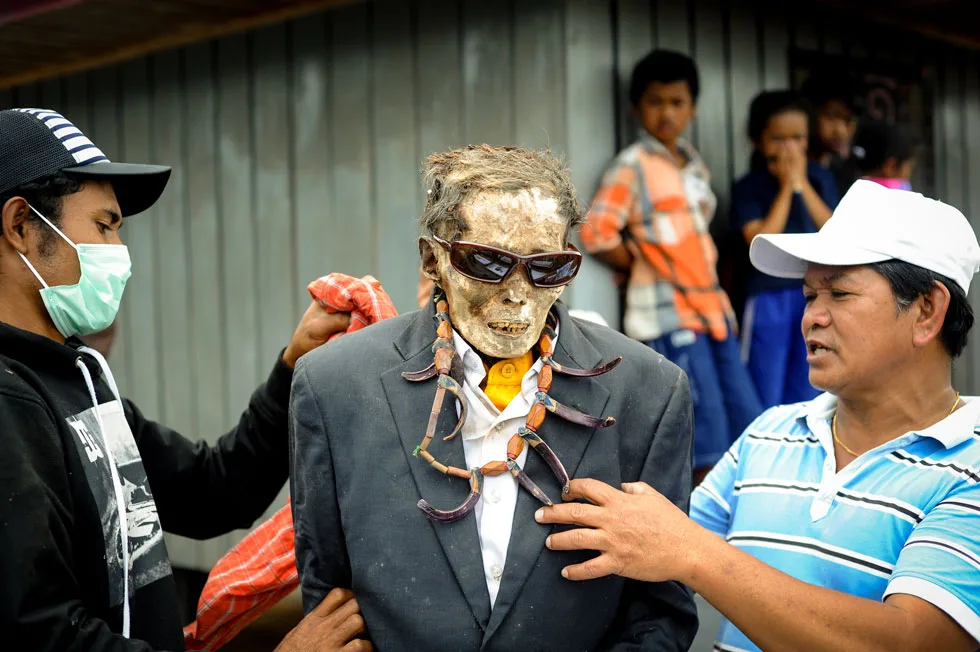
After removing the coffins, the family members take out the remains. Because the Toraja use traditional mummification techniques, the bodies often stay remarkably intact. Specifically, family members use soft brushes to remove dust. They treat the remains with the same gentleness they would show a living person. This stage of the Ma’nene Festival Indonesia emphasizes that the soul still lingers near the physical form.
3. The Dressing Ritual for the Ancestors
This part of the ritual attracts the most global attention. For instance, the family replaces old clothes with brand-new outfits. Men often wear designer suits and sunglasses, while women receive beautiful traditional lace dresses. This act signifies that the ancestors remain dignified members of the community. You can read more about global cultural trends here.
The Enduring Importance of the Second Funeral
The Toraja culture places immense value on the “Second Funeral.” In many ways, this practice acts as a recurring tribute that keeps history alive. If you track latest news updates on world traditions, you will see that these rituals are growing in popularity among researchers. Moreover, the high cost of water buffalo sacrifices often delays initial funerals for years.
During this waiting period, the family treats the deceased as “sick.” However, the Ma’nene Festival Indonesia ensures that even if a final burial is delayed, the ancestor receives the honor they deserve. Ultimately, it prevents the living from forgetting the names and faces of those who came before them.
Social and Digital Impacts of the Indonesian Ritual
Beyond the spiritual aspects, the festival serves a vital social function. Specifically, it acts as a massive family gathering. Distant cousins and relatives meet at the ancestral gravesite to bond. During the event, they share news about marriages, births, and business successes with the deceased.
Similarly, modern technology has changed the way people document their heritage. Families now use smartphones to take photos with their ancestors and share them on social media. While some outsiders find this shocking, the Toraja see it as a way to integrate their heritage into the 21st century. Therefore, they do not view the body as a “corpse” but as a beloved elder.
Economic Benefits of the Ma’nene Festival Indonesia
Tourism plays a major role in the preservation of these customs. In fact, travelers visit the Tana Toraja regency specifically to witness the Ma’nene Festival Indonesia. This influx of visitors supports local hotels, guides, and artisans. Nevertheless, the community maintains strict rules to ensure that tourism does not disrespect the sacred nature of the tombs. If you are interested in regional economic impacts, you can see how cultural tourism supports rural development.
Comparing the Ma’nene Festival Indonesia to Global Customs
Many people compare this ritual to the “Day of the Dead” in Mexico. While both traditions celebrate the return of souls, the Indonesian version is unique because of the physical interaction. Indeed, the act of touching, cleaning, and dressing the body creates a psychological closeness. As a consequence, it removes the “taboo” of death and replaces it with a sense of duty and continuity.
Conclusion: A Legacy of Love and Memory
The Ma’nene Festival Indonesia proves that love does not end when the heart stops beating. It is a vibrant, active celebration of lineage and memory. For the people of Sulawesi, the ancestors are the roots of the tree, and the living are the branches. So, as long as the family performs these rituals, the tree will never die.