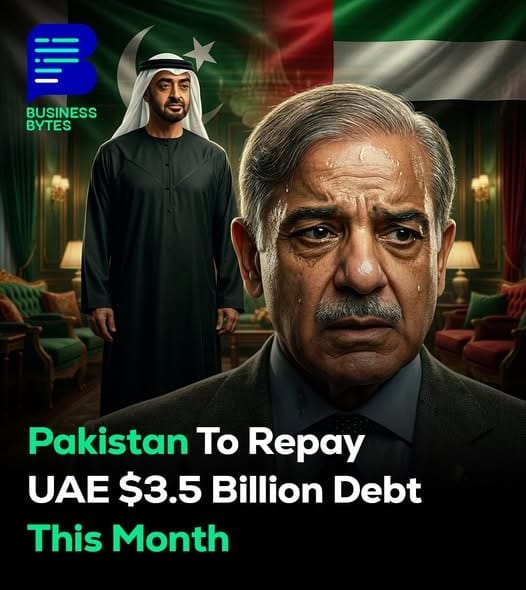
Economic experts are currently watching a historic shift in South Asian finance. Recently, news surfaced that Pakistan rejects UAE deposit extensions. For many years, Pakistan relied on “rolling over” its bilateral debt. This meant delaying repayments to keep the national treasury stable. However, in April 2026, the government chose a different path. It decided to settle a massive $3.5 billion obligation to the United Arab Emirates instead of asking for more time.
This decision marks a major break from short-term dependency. Historically, the UAE rolled over these funds every year. Now, the geopolitical climate has changed significantly. Consequently, the news that Pakistan rejects UAE deposit renewals has taken the markets by surprise. According to official reports from the State Bank of Pakistan, the country is choosing an outright settlement to improve its global credit standing.
The $3.5 Billion Breakdown: Why Pakistan Rejects UAE Deposit Rollovers
We must look at the specific numbers to understand this move properly. The $3.5 billion total consists of three different parts. These funds supported the State Bank of Pakistan (SBP) at various times.
1. Settling the $2 Billion Principal UAE Deposit
The largest part is a $2 billion deposit. The UAE initially provided this to stabilize Pakistan’s balance of payments. In early 2026, the SBP extended this on a month-to-month basis. However, the latest maturity date was April 17, 2026. Therefore, the government chose repayment over another extension. This is a bold move for a developing economy.
2. Repaying the $1 Billion IMF Support Tranche (Where Pakistan Rejects UAE Deposit Extensions)
In 2023, the UAE gave an additional $1 billion loan. This helped Islamabad meet the requirements of the International Monetary Fund (IMF). Pakistan is scheduled to repay this tranche on April 23, 2026. Specifically, this move shows that Pakistan rejects UAE deposit rollovers to satisfy global lenders and improve its debt-to-GDP ratio.
3. Clearing the $450 Million Legacy Bilateral Debt
Furthermore, Pakistan is also paying a $450 million loan from the 1996–97 fiscal year. By settling this old debt on April 11, 2026, the Ministry of Finance is cleaning its books. In fact, this removes liabilities that stayed on the balance sheet for nearly thirty years. This long-term cleanup is a key part of the new fiscal policy.
Financial Impact: Interest Rates and SBP Reserves
The cost of holding these deposits is a major factor. Actually, these are not “interest-free” gifts from a friendly neighbor.
High Interest Rates: Sources indicate that Pakistan pays about 6% interest on these UAE deposits. In a high-interest global market, these “safe deposits” are becoming very expensive. Consequently, the cost of servicing this debt was draining the budget.
Failed Negotiations: Pakistan initially asked for a two-year extension at a 3% rate. But, the UAE preferred short-term, month-to-month rollovers. Because of this, the SBP decided to pay the full amount to avoid high interest.
Additionally, regional instability plays a role. The ongoing conflict involving Israel, Iran, and the US has changed priorities. Because of these tensions, the UAE wants to bolster its own liquidity. This pressure explains why Pakistan rejects UAE deposit renewals so suddenly this month. Moreover, the government believes that maintaining a clean credit record is better than holding onto borrowed cash.
The IMF Strategy and National Reserve Stability (Linked to why Pakistan Rejects UAE Deposit Renewals)
The IMF currently oversees a $7 billion program in Pakistan. Their “Debt Sustainability” mandate is very strict. For example, the IMF prefers countries to have “earned” reserves rather than “borrowed” ones. By repaying the UAE, Pakistan proves its financial health to the world. In addition, it makes the next round of IMF negotiations much easier.
Currently, Pakistan holds $21.7 billion in total reserves. Even after a $3.5 billion outflow, the country remains stable. Moreover, this is a bold message to international investors. It says that Pakistan is open for business and can handle its debts. For more details on local impacts, you can check the latest UAE Gold Rates Today or stay updated with Pakistan Fuel Price Updates.
Transitioning from “Aid to Trade” Investment Models
The UAE is also changing its foreign policy. They are moving away from simple cash injections. Instead, they want Equity-Based Investments. When Pakistan rejects UAE deposit terms, it creates room for new partnerships. Basically, the UAE wants to own assets rather than just lending money.
The Special Investment Facilitation Council (SIFC) is now talking with UAE officials. Basically, they want to turn debt into direct investment. This includes selling stakes in airports and energy projects. As a result, this “handshake over handout” model is the future of their relationship. Furthermore, this attracts other investors from Saudi Arabia and Qatar.
Conclusion: A High-Stakes Gamble for Economic Sovereignty
The fact that Pakistan rejects UAE deposit extensions is a landmark moment. In conclusion, it suggests the country is ready to end “begging bowl” diplomacy. Of course, this path has risks. Currency volatility remains a concern for the second half of 2026. However, the government is confident that increased exports will bridge the gap.
Overall, the long-term benefits are clear. By fulfilling its duties now, Pakistan builds its credit credibility. It is finally becoming a mature partner in the global market. Ultimately, this move could be the turning point for the nation’s economy.