US-Iran War 2026: Analysis of the First 30 Days
The landscape of the modern Middle East changed forever in early 2026. Consequently, the hypothetical scenarios that long haunted global diplomats became a brutal, waking reality. This swift shift unleashed a massive geopolitical storm that still reverberates through financial and defense sectors across the globe. While the focus of many analysts remains on the direct military confrontation, the US-Iran War 2026 never stayed confined within two borders. Instead, it immediately escalated into a complex regional conflagration, pulling every nation from the Mediterranean to the Arabian Sea into its volatile orbit.
Furthermore, this article provides a detailed analysis of the first 30 days of the conflict. We examine the tactical triggers that sparked the combat, the immediate regional fallout that reshaped alliances, and the long-term consequences for the Middle East’s security. By breaking down the timeline and the strategic maneuvers, we can better understand the forces driving this modern crisis.
The Initial Strikes of the US-Iran War 2026
Tension between Washington and Tehran finally boiled over following the complete failure of diplomatic negotiations. In the early hours of February 28, 2026, the United States and Israel launched “Operation Epic Fury”. Specifically, this joint military campaign targeted Iran’s nuclear facilities, missile silos, and heavy IRGC infrastructure.
Strategic Use of Stealth and Missiles
The U.S. military deployed advanced stealth technology and Tomahawk cruise missiles to neutralize Iran’s retaliatory capabilities in the opening hours. However, the strikes caused an immediate and heavy humanitarian impact inside Iran. Thousands of casualties occurred within the first 24 hours of the bombardment.
The coalition prioritized taking out command centers and radar arrays, effectively blinding local air defenses before the primary strike packages arrived. This tactical dominance allowed the coalition to strike deep into the interior, hitting facilities that many previously considered untouchable.
Sudden Crisis in the Iranian Leadership
Moreover, reports indicate the initial strikes eliminated several senior Iranian leaders, including Supreme Leader Ayatollah Ali Khamenei. This immense loss plunged the Iranian state into an immediate and chaotic succession crisis.
Without the central authority that had guided the Islamic Republic for decades, various factions within the military and the clergy began positioning themselves for power. This internal friction slowed Iran’s initial response time and forced field commanders to make autonomous decisions without a unified central strategy.
How the Axis of Resistance Mobilized in the US-Iran War 2026
Contrary to early beliefs among Western planners, the war did not remain contained on Iranian soil. Iran quickly activated its network of regional proxies, initiating a highly synchronized retaliation across the Middle East.
Heavy Rocket Fire on the Northern Front
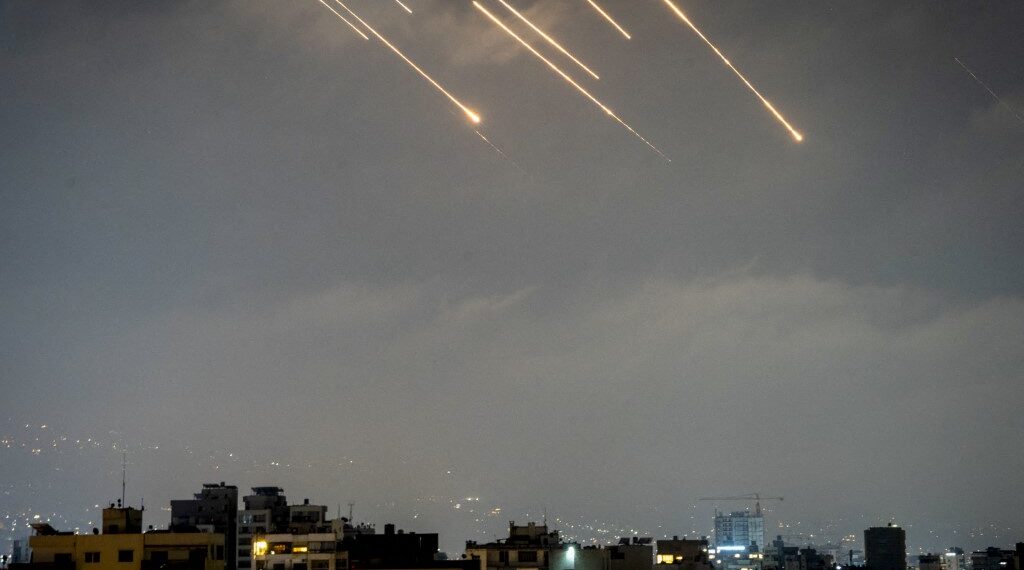
Within hours of the initial strikes, Hezbollah launched thousands of rockets into Northern Israel. Although the Iron Dome and David’s Sling intercepted many of these projectiles, the sheer volume caused significant structural damage to civilian centers. As a result, Israel responded with aggressive ground campaigns into southern Lebanon to push the rocket batteries back from the border. This created a multi-front war for the IDF, stretching their resources and testing their reserve mobilization protocols.
Broadening the Conflict to the Gulf States
Iran also targeted its Gulf neighbors in a bid to raise the cost of the war for Western allies. Because these nations house critical U.S. bases, Iran labeled them “complicit” in the initial attacks.
For instance, drones and missiles struck commercial hubs in Dubai and Riyadh. The attackers specifically targeted these areas to destroy the region’s image of safety and economic stability. These strikes sent panic through the expat communities and forced multinational corporations to execute emergency evacuation protocols for their staff.
Provoking Maritime Chaos in the Strait
Meanwhile, Iran officially closed the Strait of Hormuz. They used specialized sea mines and fast-attack boats to seize or disable commercial oil tankers trying to navigate the narrow passage.
Consequently, a U.S.-led naval coalition attempted to reopen the strait by force. This initiative led to intense, close-quarters naval skirmishes that resulted in losses on both sides. The disruption immediately bottlenecked global supply chains, proving that local conflicts carry massive global weight.
Economic Shockwaves and Succession During the US-Iran War 2026
Because the conflict severed the main energy arteries of the Persian Gulf, the economic consequences struck the world immediately. Brent Crude oil prices surged over 40% in just the first ten days of the conflict. Additionally, the closure of vast swaths of Middle Eastern airspace grounded major regional carriers like Emirates and Etihad, leaving thousands of international travelers stranded.
The sudden energy spike caused a domino effect in Western markets. Gas prices shot up at the pump, and manufacturing costs increased, fueling a brand-new wave of global inflation that central banks struggled to contain.
Internal Strife and the New Supreme Leader
Internally, the Iranian regime faced an immediate existential threat from its own citizens. The Assembly of Experts quickly appointed Mojtaba Khamenei as the new Supreme Leader to fill the power vacuum.
Nevertheless, intense military pressure and strict internet blackouts ignited new waves of domestic protest in major cities like Tehran and Tabriz. Citizens who opposed the regime saw the external chaos as an opportunity to demand systemic change. The regime now struggles heavily to fight a high-tech external war while simultaneously suppressing an active internal uprising.
A New Era for the Middle East
In summary, the first 30 days of the conflict have altered the security architecture of the Middle East forever. The conflict demonstrated clearly that any direct confrontation with a major regional player inevitably involves every surrounding nation.
As the thick smoke of the first 30 days clears, nations are entering a period of painful recalibration. Defense budgets are skyrocketing, and countries are reassessing their reliance on foreign military protection. Ultimately, the US-Iran War 2026 serves as the definitive starting point for a more volatile, unpredictable era in global history.